The density of wood-based panels: Why does it make a difference?
October 9 , 2026
In the manufacture of furniture, technical packaging or industrial components, density is one of the parameters that determines how a panel behaves during processing and in its final use.
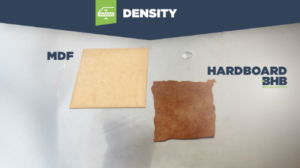
Comparing MDF with Hardboard helps to understand why higher density can make a difference in aspects such as rigidity, strength and surface quality.
Hardboard vs MDF: A difference in density
The main difference between both materials lies in their level of compaction and manufacturing process:
- MDF (Medium Density Fibreboard): Usually has densities between 600 and 750 kg/m³, manufactured using a dry process with the addition of synthetic resins.
- Hardboard: Exceeds 900 kg/m³, with typical values of 950–1000 kg/m³.
This difference in mass is due to our wet production process at high pressure and temperature, where the wood fibres are compacted to the maximum using natural lignin as the sole binder, without the need to add artificial glues or formaldehyde.
What does a high-density structure provide in the workshop?
Working with an ultra-dense core of approximately 900 kg/m³ directly influences three key aspects of machining and assembly:
- Hardware retention: Ensures a firm screw grip, preventing screws from stripping or hinges from loosening.
- Clean machining and routing: Its compact core prevents the material from fraying, splintering or crumbling when passing through the router at high speed, achieving clean and well-defined edges.
- Uniform finish absorption: Its much more closed and dense pore structure prevents uneven absorption of paints or lacquers.
- Its high density gives it great surface hardness, superior mechanical resistance to impact and good performance in damp conditions.
Different Hardboard solutions according to application
At HTP Global Group, we develop different types of Hardboard to meet specific needs:
- HTP Premium: The standard and extremely versatile solution for general furniture and carpentry applications (available in HB and HB.H versions with CE marking).
- HTP Flex: Developed to achieve extreme curves and organic shapes without cracking or splitting the panel.
- HTP Painted / Hydro Painted: Factory-coated with UV-cured water-based paint, with options offering improved moisture resistance, ideal for bathrooms and kitchens.
- HTP Perforated: Designed for ventilated fronts, acoustic solutions and commercial furniture with various perforation patterns.
Choosing the right density from the design stage is the best guarantee of ensuring the final quality of the piece.
Do you need to find the Hardboard solution best suited to the requirements of your next project?
Contact the HTP Global Group technical team to check specifications, request technical datasheets or ask for samples directly.